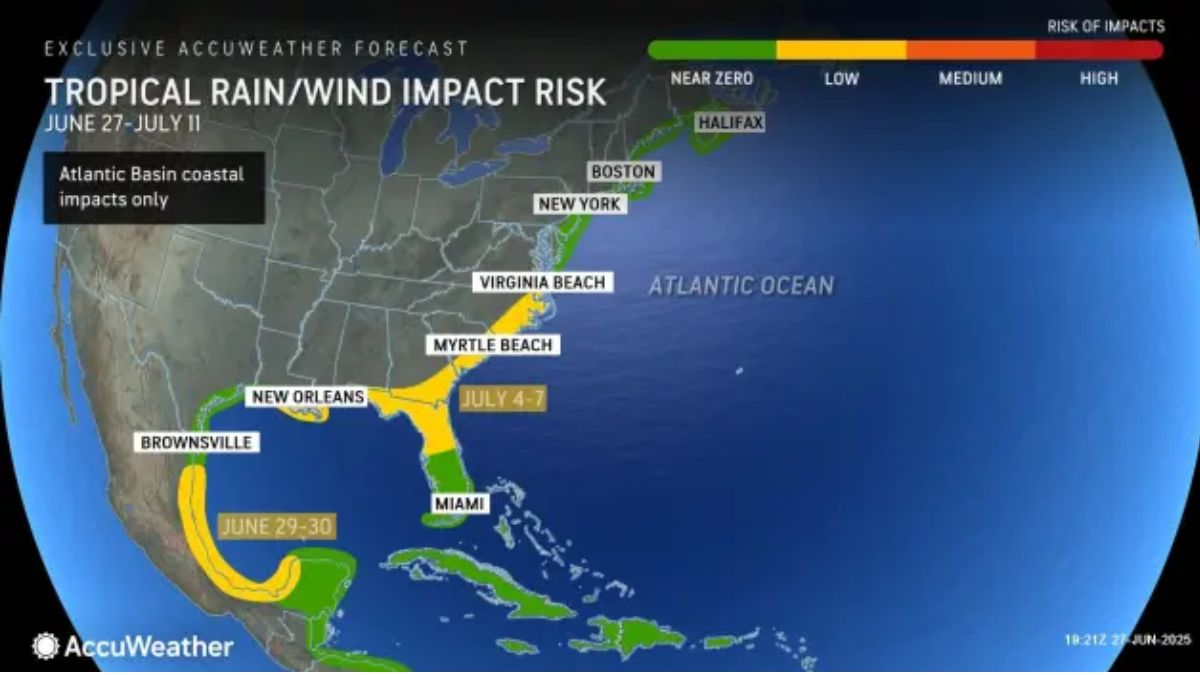
Forecasters are keeping a close watch on the Atlantic as the July 4th holiday weekend approaches, with the FOX Forecast Center monitoring a possible area of tropical development off the Southeast coast. While nothing is organized yet, meteorologists say the setup is worth tracking closely as families prepare for holiday travel and beach trips.
So far, this hurricane season has been relatively quiet. The only named storm to date, Tropical Storm Arthur, formed early and stayed weak and disorganized as it moved over the Gulf, making landfall near Freeport, Texas, in mid-June.
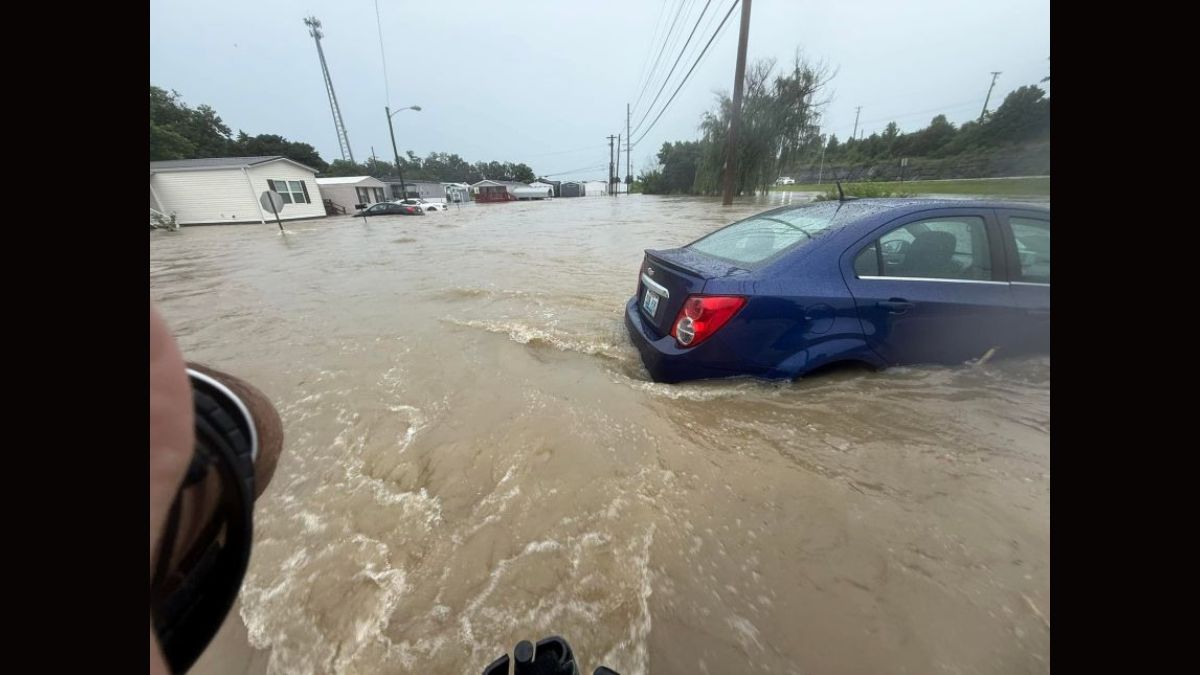
That storm brought heavy rain and flooding to parts of the Texas coast but did not develop into a major system.
Now attention is shifting east. The focus of the potential new activity is tied to leftover energy from a previous weather system, sometimes called a front zone, expected to settle over the Southeast around the middle of next week.
Just to the north, a strong heat dome will be building over the eastern United States, and forecasters say that the boundary between the heat dome and the front zone is exactly where tropical development could try to take shape.
What’s Working For and Against Development
Several forecast models are already picking up small areas of low-level spin along this leftover energy, though confidence in any real organization remains low at this stage. Still, there are a few factors that could favor development.
Ocean waters in the subtropical Atlantic east of Florida are running unusually warm for this time of year, well above the seasonal average for the rest of the basin. Wind shear, which can tear apart developing storms, also isn’t expected to be as strong as it has been recently.
On the other hand, dry air remains the biggest obstacle. Abundant dry air on both sides of the front is limiting the moisture needed for tropical systems to organize, and that dryness is a significant red flag for any storm trying to form.
Thick Saharan dust drifting across the Atlantic is adding to the problem, acting like a blanket that pulls moisture out of the atmosphere and suppresses storm activity across the basin.
If something does manage to organize despite these obstacles, forecasters say the steering flow beneath the heat dome would likely push it back toward the U.S. mainland rather than out to sea.
What Comes Next for the Holiday Weekend
For context, an average Atlantic hurricane season typically produces its second named storm by June 24th and its third by July 6th, meaning this season is currently running behind the typical pace.
Outside of this one area of interest, the rest of the Atlantic basin is described as quiet, with no other tropical development expected through the end of the month.
Forecasters are also watching strengthening upper-level winds expected to move across the basin heading into July, particularly over the Main Development Region between Africa and the Caribbean, which could further suppress any tropical waves trying to form.
For now, coastal residents along the Southeast do not need to take any action, but officials recommend keeping an eye on updated forecasts as the holiday weekend draws closer, since conditions can change quickly this time of year.