The National Weather Service has put residents in five states on alert for an extreme heat risk starting this weekend, with temperatures expected to climb past 100 degrees in many areas.
The warning comes as forecasters track a heat wave that will stretch from the Southeast into the Midwest and could linger well into the holiday week ahead.
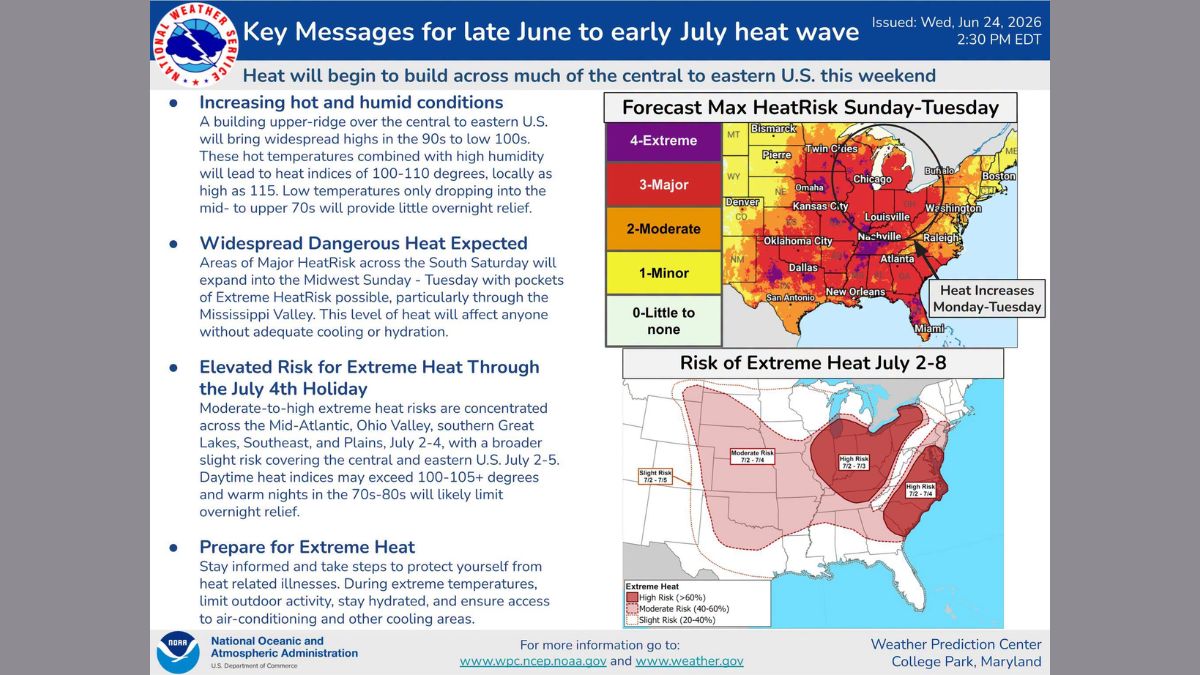
Officials say the most intense conditions will begin Sunday, June 28, and continue through early next week. Texas, Louisiana, Florida, Georgia, and South Carolina are all under the highest level of heat risk, meaning anyone without reliable air conditioning or proper hydration could face serious danger.
The agency noted that overnight lows will offer little relief, with temperatures only dropping into the upper 70s and lower 80s in some spots, a range warm enough to set new records for nighttime heat.
By Monday and Tuesday, forecasters expect the zone of extreme risk to widen further, pushing into the Midwest and Great Lakes region.
Separately, the Weather Prediction Center has flagged a broader heat wave settling over much of the central and eastern United States that could carry through the Fourth of July holiday, raising concerns for outdoor gatherings and travel during one of the busiest weeks of the summer.
Why this heat wave is different
Meteorologists are pointing to the lack of overnight cooling as the biggest concern. Normally, nighttime hours give the body and home a chance to recover from daytime heat.
When lows stay in the high 70s or 80s, that recovery window shrinks, and the strain on the body builds day after day. This pattern tends to hit older adults, young children, outdoor workers, and anyone without consistent air conditioning the hardest.
The heat is also arriving on the heels of a separate record-breaking heat wave moving through parts of Europe, a reminder that this summer’s weather patterns have been pushing temperatures to unusual extremes across multiple continents.
One commenter on social media, identifying as a Minneapolis resident, asked which two days would be the hottest in the Twin Cities, suggesting Sunday and Monday, a sign of how closely people in the path of the system are already watching the forecast.
How to stay safe this weekend
Federal safety officials are urging people in the affected areas to take the warning seriously and prepare ahead of time.
They recommend never leaving children or pets inside a parked car, even briefly, and locating a nearby cooling center if home air conditioning isn’t available.
Taking cool showers or baths can help lower body temperature, and wearing loose, lightweight, and light colored clothing makes a noticeable difference outdoors. Limiting oven use can keep homes from heating up further, while staying in the shade and wearing a wide-brimmed hat offers protection when going outside is unavoidable.
Drinking water consistently throughout the day, even without feeling thirsty, remains one of the simplest and most effective precautions.
Officials also advise avoiding strenuous outdoor activity during the hottest midday hours and checking in on elderly relatives, neighbors, and anyone who may be especially vulnerable.
Knowing the warning signs of heat cramps, heat exhaustion, and heat stroke can make the difference in catching a problem early, and pet owners should make sure animals have shade and plenty of water, since hot pavement can burn their paws.
Officials also caution against relying on fans alone in extreme heat. While a fan can make a room feel slightly more comfortable, it does not actually lower body temperature and offers little protection once conditions cross into dangerous territory.
Libraries, shopping malls, and local health departments are often good resources for finding a free place to cool off during the day.
With the heat wave expected to expand across a large stretch of the country in the coming days, residents in the affected states are being encouraged to monitor local forecasts closely and have a cooling plan ready before temperatures peak this weekend.