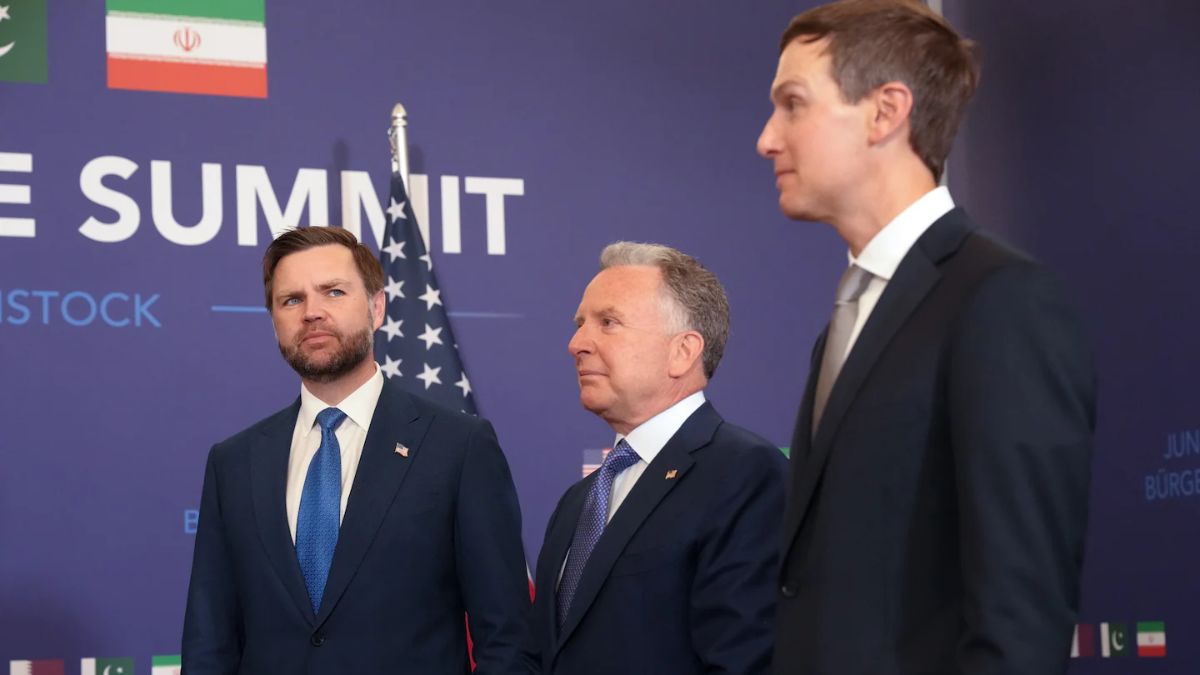
Negotiators meeting at the Burgenstock Resort near Lucerne, Switzerland, made “encouraging progress” toward a lasting peace deal, even after a tense moment when President Trump threatened Iran on live television.
Round two of high-level negotiations between the United States and Iran wrapped up in Switzerland early Monday with both sides describing the session as “positive and constructive,” according to mediators Qatar and Pakistan. The breakthrough came only hours after the process appeared to be falling apart.
The trouble started when President Donald Trump spoke to Fox News and warned Iranian officials directly that closing the Strait of Hormuz would cost them their country.
According to Fox correspondent Trey Yingst, Trump claimed he told Iran’s delegation, “You close the strait and you won’t have a country. You won’t even make it back to your country, we’ll take over the rest of the country.”
Iranian state media reported that talks paused after what it called “the publication of an insulting message by the US president.” The Iranian delegation reportedly met briefly with Qatari mediators and left the negotiating site.
A senior US diplomat speaking on condition of anonymity said later that the Iranians had stayed on site and that negotiations continued through the night.
By the time the talks concluded, the mood had shifted. Iranian foreign ministry spokesperson Esmaeil Baghaei said “good progress was made,” a notably calmer tone given how the day began.
Foreign Minister Abbas Araghchi added that sanctions on Iranian oil had been waived and that frozen Iranian assets abroad had been released, along with what he called a major reconstruction and development plan for Iran.
New Mechanisms for Hormuz and Lebanon
Mediators said the two sides agreed to set up a High Level Committee to oversee the broader mediation process, with smaller groups focused on nuclear issues, sanctions, and other parts of implementing the agreement signed earlier this year.
On the Strait of Hormuz, which Iran’s military said it closed again over the weekend in protest of continued Israeli strikes in Lebanon, the US and Iran agreed to establish a direct line of communication.
The goal is to avoid incidents and miscommunication and ensure safe passage for commercial vessels through the waterway for the 60-day window laid out in the original memorandum of understanding. US Central Command has disputed that the strait was actually closed.
Analysts caution that a communication line alone may not be enough to restore shipping confidence.
Gregg Carlstrom, Middle East correspondent for the Economist, told CNN that the real test isn’t whether Iran says the strait is open, but whether shippers and insurers believe it.
He said continued back and forth over the strait’s status will likely keep companies reluctant to send tankers through.
The other major sticking point remains Lebanon. Israel’s ongoing campaign against Hezbollah, which has continued despite a recent ceasefire renewal, has killed more than 4,000 people since March 2, according to Lebanon’s health ministry.
To address this, the US and Iran agreed to create a “de-confliction cell” involving Lebanon and facilitated by Qatar and Pakistan, aimed at enforcing the end of military operations there. Araghchi called this effort the “first real test” of whether the broader agreement can hold.
Technical talks between US and Iranian negotiators are set to continue in Switzerland throughout the week, with officials from both sides cautiously optimistic that the framework agreed upon can survive future political friction, including further unscripted remarks from Washington.